Lowe’s Media Network - Self Service
Self Service is a centralized hub for vendors to view their campaign performance and assets.
Tools Used


Lowe’s Media Network - Self Service
Self Service is a centralized hub for vendors to view their campaign performance and assets.
Tools Used

Product Overview
Lowe’s Media Network – Self Service is an internal platform designed to give vendors and internal teams a clear, actionable view of marketing performance. The goal of this redesign was to modernize the interface, make it more intuitive and modular, and align it with how users actually plan and measure campaigns.
The solution involved restructuring the dashboard layout, simplifying how current campaigns are tracked, and establishing a consistent hierarchy across views. This required close collaboration with engineering and vendor partners to balance technical constraints with usability and design system alignment.
May 2025 - Present
Lowe’s Media Network
Product Designer


The Problem
While functional, the original dashboard lacked clarity and consistency. It had not yet been rebuilt within our design system, and its interface did not reflect modern UX standards. Users struggled to interpret metrics quickly, and the layout didn’t support scalable planning or performance analysis.
Goals
Rebuild the dashboard using our internal design system for consistency and scalability
Modernize the interface to improve clarity and usability
Create a modular structure that supports campaign planning, performance tracking, and creative review
Ensure the design meets the needs of both internal teams and external vendor partners
Design Process
Exploration
I began with a competitive analysis of similar platforms to understand what vendors typically expect when reviewing campaign performance. Since access to the full vendor dashboard was limited, I also reviewed available views to identify gaps and opportunities for improvement.
This phase helped clarify which metrics mattered most, how they were grouped, and what layout patterns best supported vendor workflows.
Iteration
I restructured the platform into three key pages, each tailored to a specific layer of campaign insight:
Overview: high level metrics and graphs
Campaign Performance Overview: detailed table with every campaign for a specific vendor
Campaign Performance: detailed tables for each channel in a campaign
Final Design
Modular layout with consistent hierarchy and reusable components
Filtering by channel, campaign, and time range for tailored insights
Export options for both complete datasets and filtered views
Integrated creative previews linked to performance metrics
Full alignment with Lowe’s design system for scalability and consistency


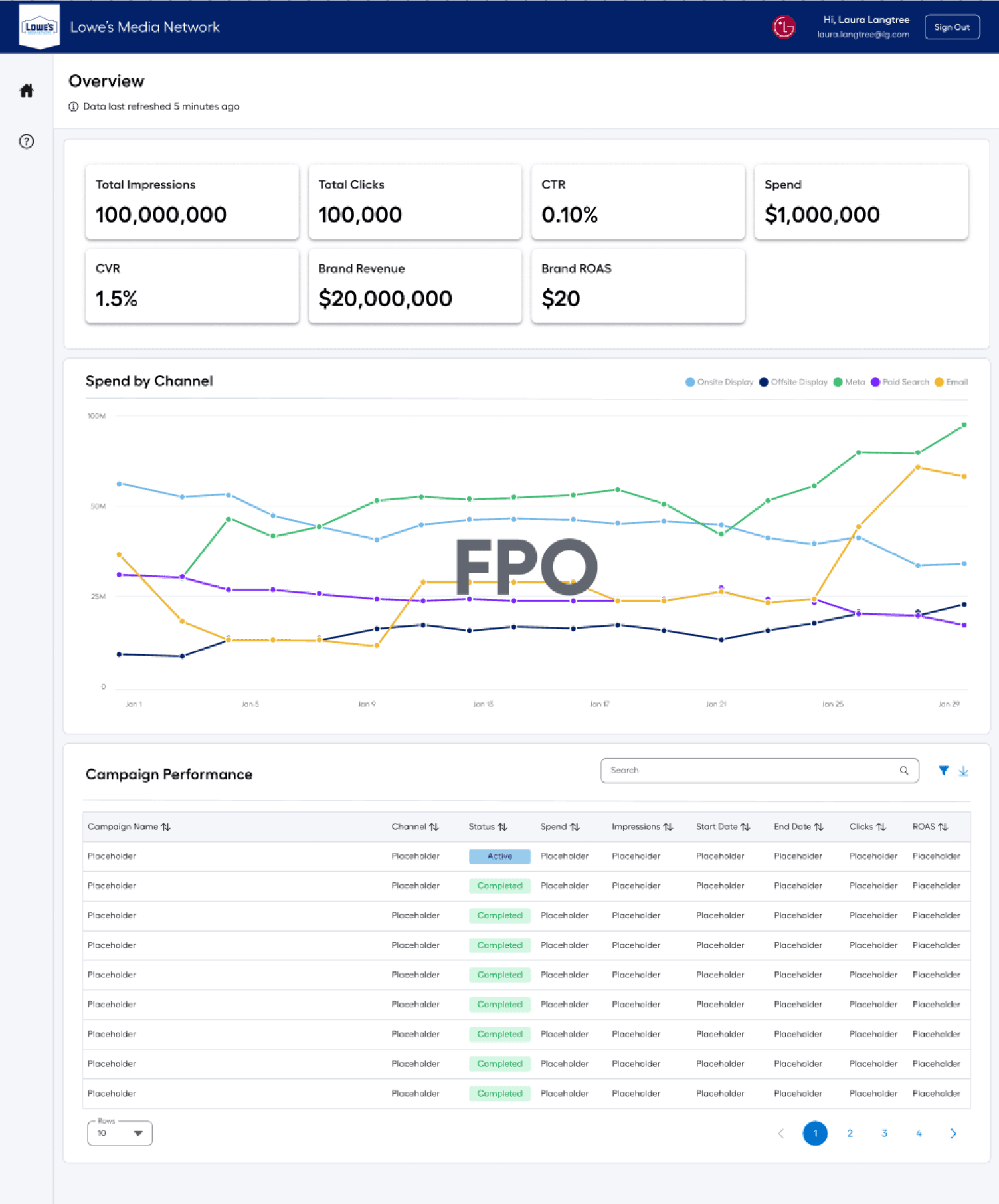
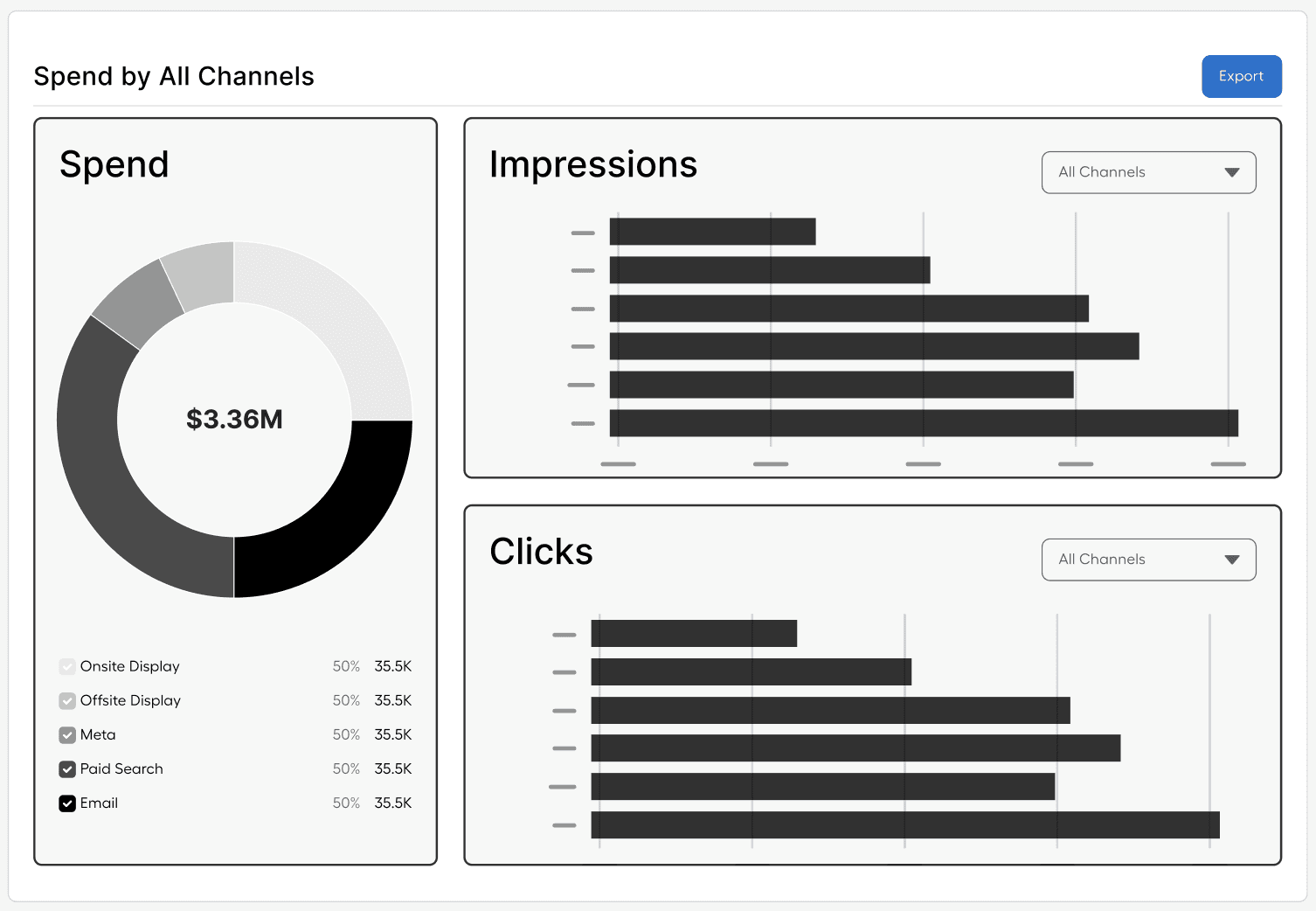
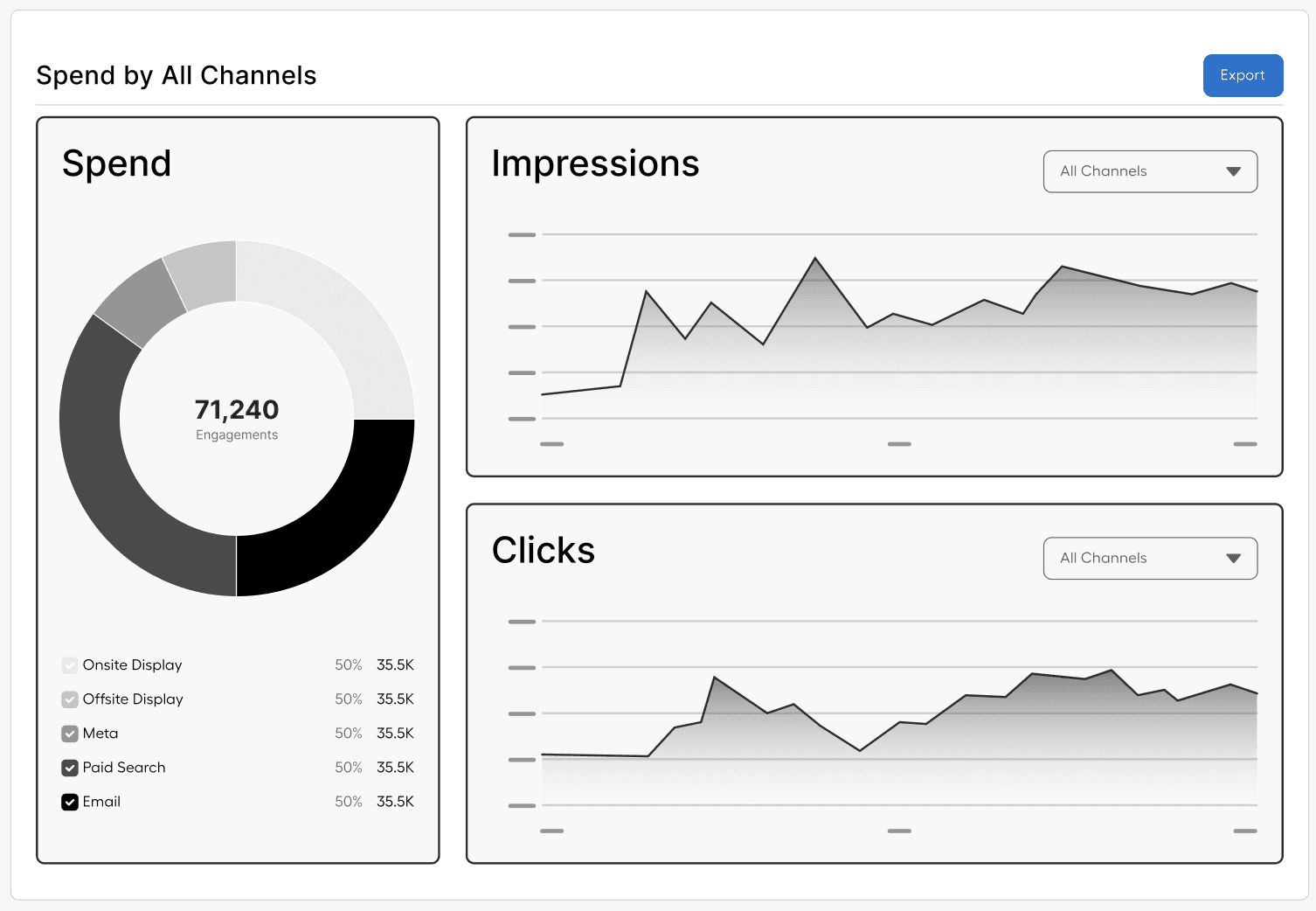
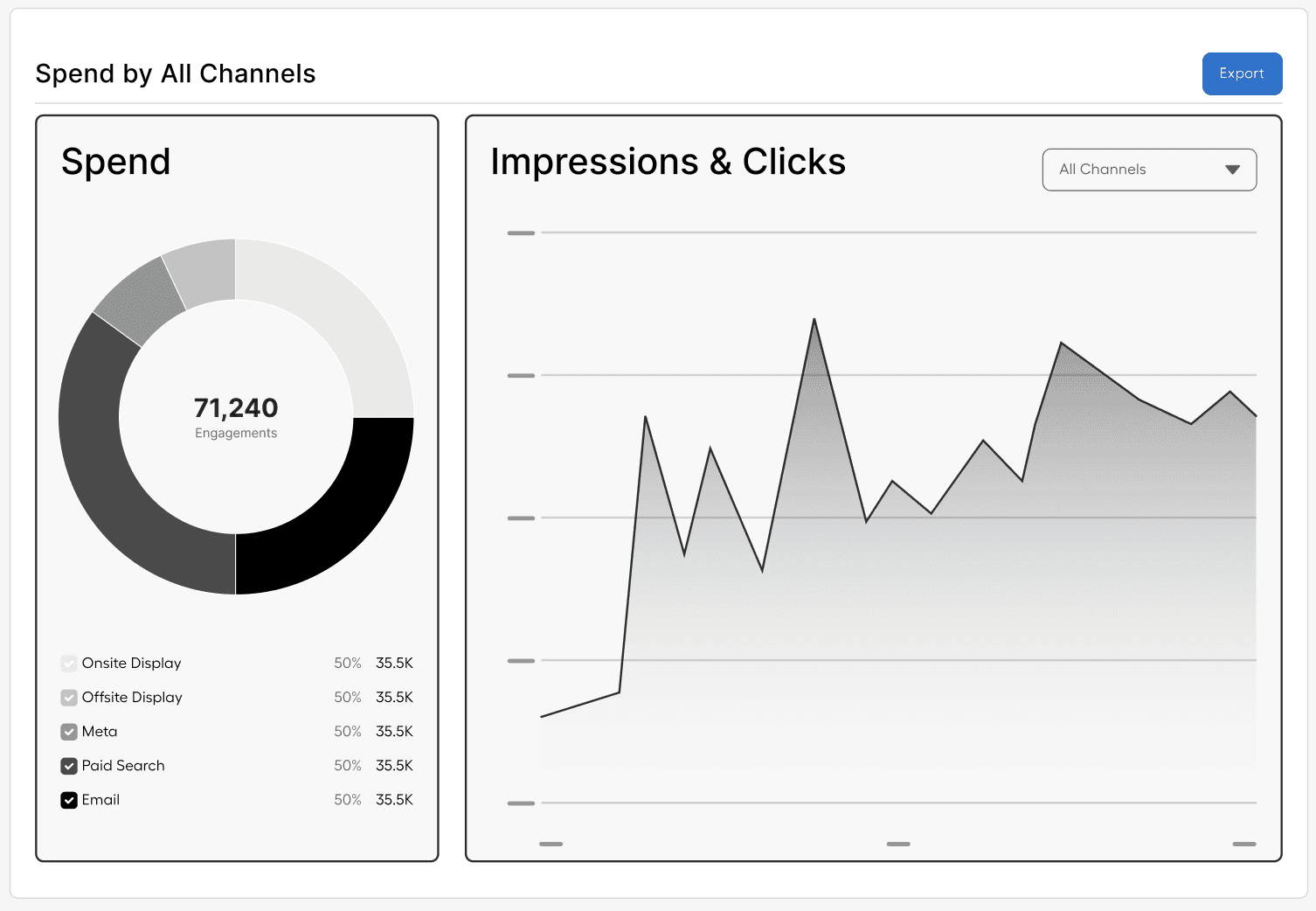
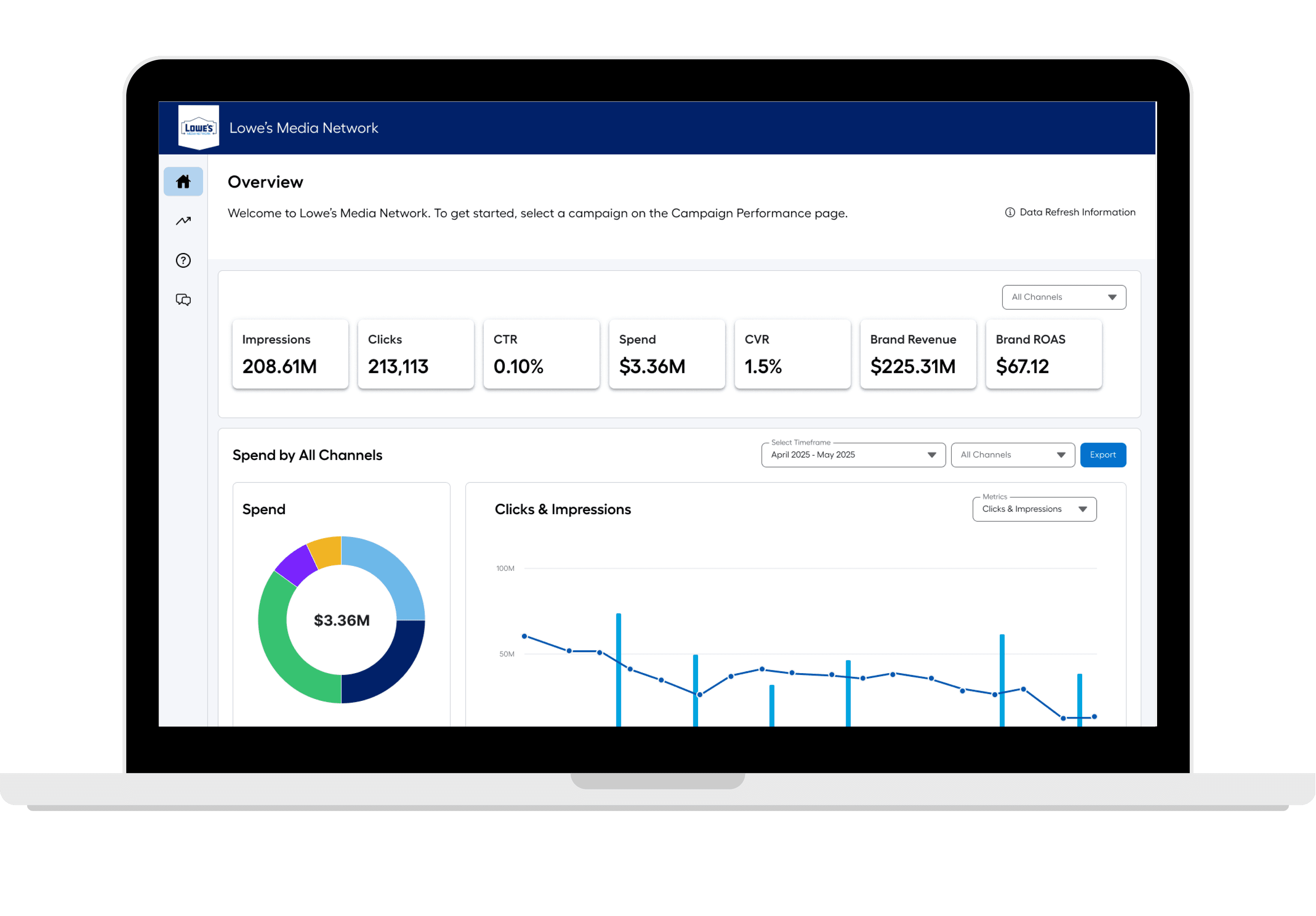
This screen provides a high-level snapshot of campaign performance metrics, designed for quick interpretation by Admin and vendor partners. Key performance indicators (KPIs) such as impressions, clicks, spend, revenue, and ROAS are surfaced at the top using large, legible typography and consistent formatting. Visualizations like the pie chart “Spend by All Channels” and line graph “Clicks & Impressions” offer immediate insight into channel distribution and engagement trends. The layout emphasizes clarity and hierarchy, allowing users to assess campaign health at a glance and identify areas for deeper analysis.


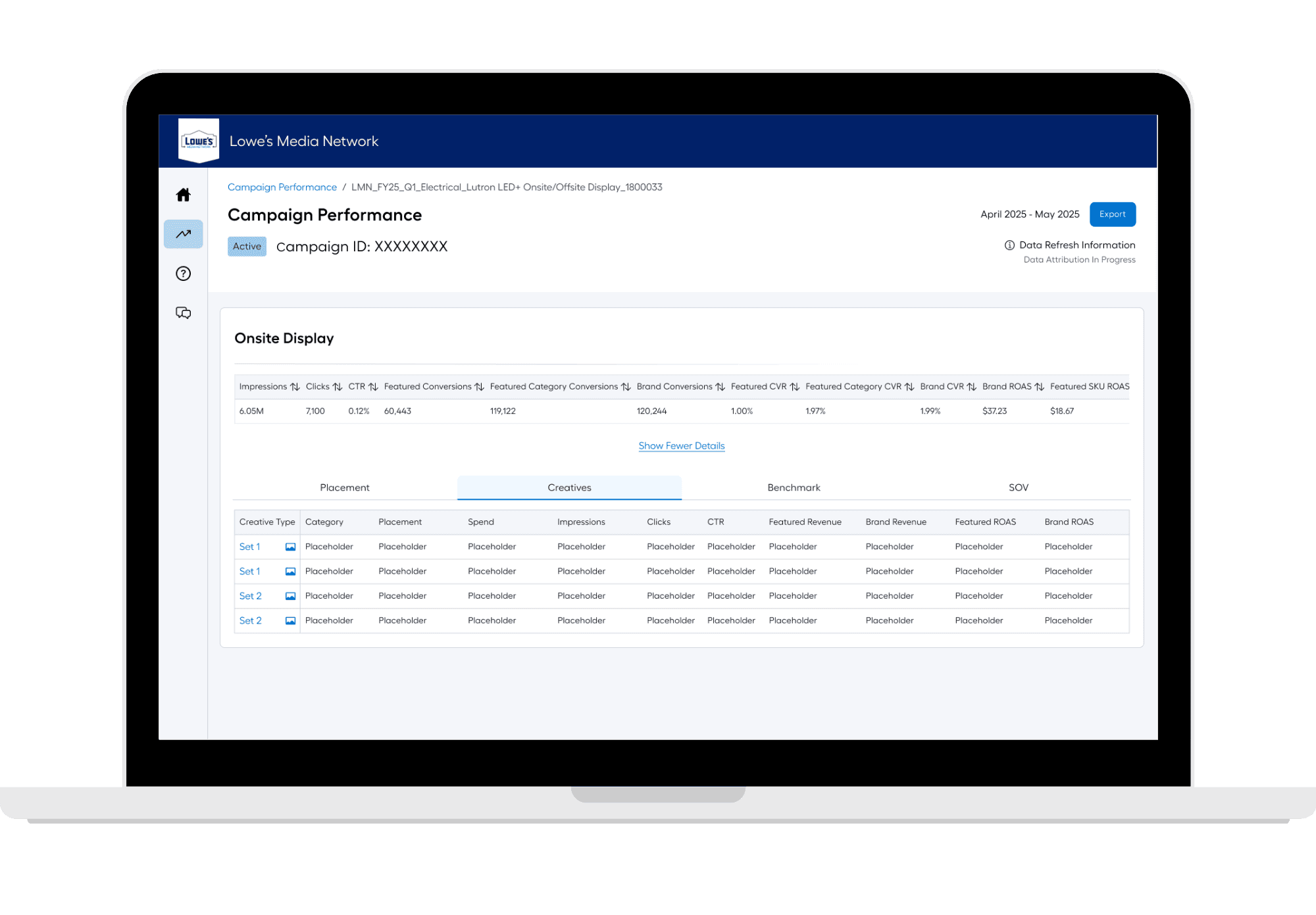
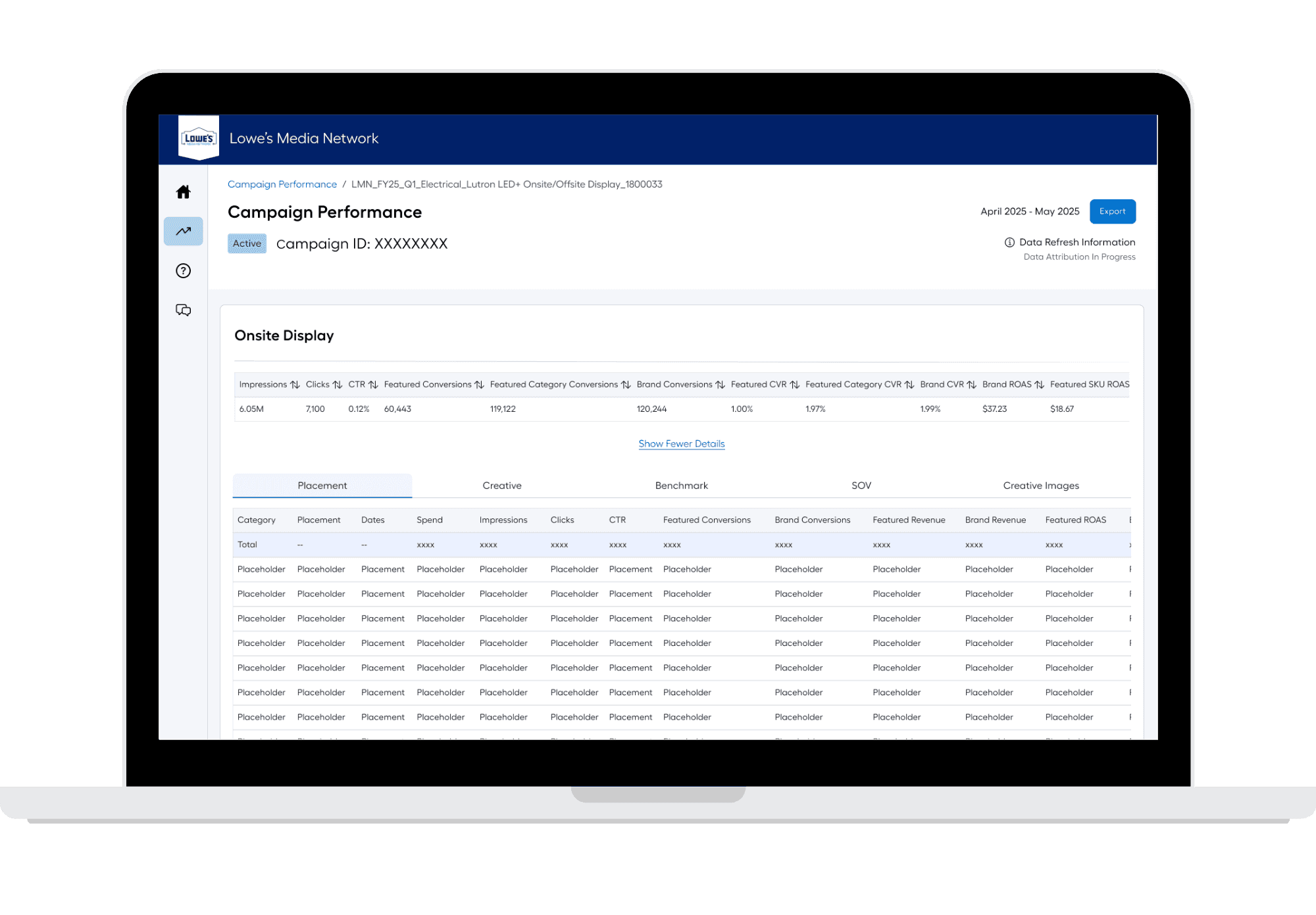
This screen presents detailed campaign performance metrics segmented by channel. While the current view displays Onsite Display, when you scroll down you have access to the other channels.


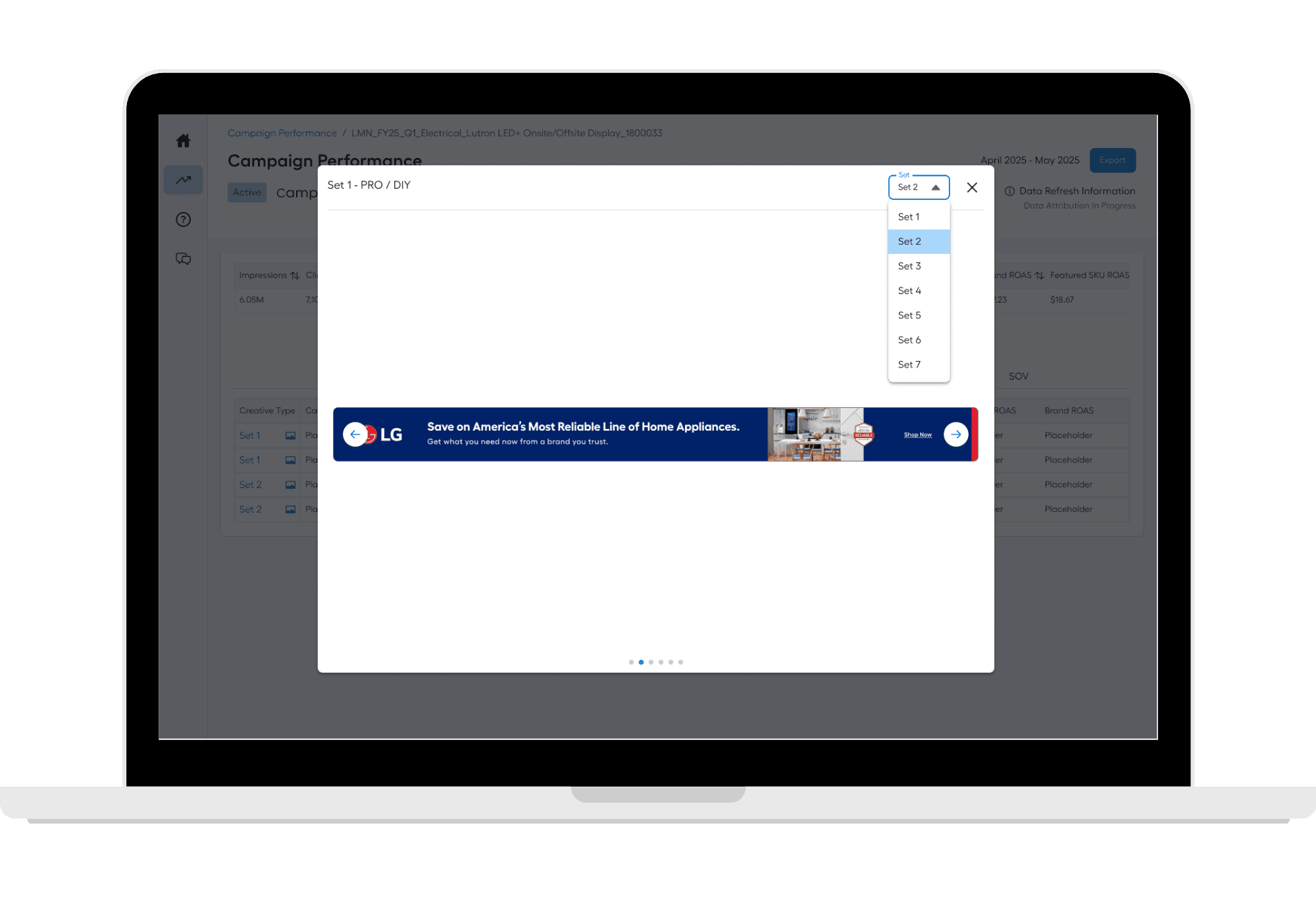
This screen introduces a carousel of creative assets tied to campaign performance, allowing users to visually assess what’s running. The modal format keeps users anchored in the dashboard while offering a focused view of content.
Reflections
This project reinforced the value of deep collaboration across engineering, product management, and research. Working within technical constraints required thoughtful hand offs, and aligning with the design system ensured cohesion across Lowe’s Media Network.
It also highlighted the importance of designing for both internal clarity and external usability — especially when vendors rely on these tools to make strategic decisions.
Next Steps
Continue refining dashboard layouts and filtering interactions based on feedback
Expand export functionality with more customizable options
Integrate additional creative performance metrics to support richer analysis
Improve usability of the Campaign Performance page for faster scanning and comparison
Monitor adoption and iterate based on vendor and internal team feedback
Product Launch
In October 2025, the platform I designed and built for Lowe’s Media Network was publicly launched at the Vendor Forum 2025. The rollout was highlighted in Jennifer Wilson’s LinkedIn post, underscoring the importance of empowering partners with actionable insights.
View Post

Lowe’s Media Network - Self Service
Self Service is a centralized hub for vendors to view their campaign performance and assets.
Tools Used


Lowe’s Media Network - Self Service
Self Service is a centralized hub for vendors to view their campaign performance and assets.
Tools Used


Lowe’s Media Network - Self Service
Self Service is a centralized hub for vendors to view their campaign performance and assets.
Tools Used

Product Overview
Lowe’s Media Network – Self Service is an internal platform designed to give vendors and internal teams a clear, actionable view of marketing performance. The goal of this redesign was to modernize the interface, make it more intuitive and modular, and align it with how users actually plan and measure campaigns.
The solution involved restructuring the dashboard layout, simplifying how current campaigns are tracked, and establishing a consistent hierarchy across views. This required close collaboration with engineering and vendor partners to balance technical constraints with usability and design system alignment.
May 2025 - Present
Lowe’s Media Network
Product Designer


The Problem
While functional, the original dashboard lacked clarity and consistency. It had not yet been rebuilt within our design system, and its interface did not reflect modern UX standards. Users struggled to interpret metrics quickly, and the layout didn’t support scalable planning or performance analysis.
Goals
Rebuild the dashboard using our internal design system for consistency and scalability
Modernize the interface to improve clarity and usability
Create a modular structure that supports campaign planning, performance tracking, and creative review
Ensure the design meets the needs of both internal teams and external vendor partners
Design Process
Exploration
I began with a competitive analysis of similar platforms to understand what vendors typically expect when reviewing campaign performance. Since access to the full vendor dashboard was limited, I also reviewed available views to identify gaps and opportunities for improvement.
This phase helped clarify which metrics mattered most, how they were grouped, and what layout patterns best supported vendor workflows.
Iteration
I restructured the platform into three key pages, each tailored to a specific layer of campaign insight:
Overview: high level metrics and graphs
Campaign Performance Overview: detailed table with every campaign for a specific vendor
Campaign Performance: detailed tables for each channel in a campaign
Final Design
Modular layout with consistent hierarchy and reusable components
Filtering by channel, campaign, and time range for tailored insights
Export options for both complete datasets and filtered views
Integrated creative previews linked to performance metrics
Full alignment with Lowe’s design system for scalability and consistency


This screen provides a high-level snapshot of campaign performance metrics, designed for quick interpretation by Admin and vendor partners. Key performance indicators (KPIs) such as impressions, clicks, spend, revenue, and ROAS are surfaced at the top using large, legible typography and consistent formatting. Visualizations like the pie chart “Spend by All Channels” and line graph “Clicks & Impressions” offer immediate insight into channel distribution and engagement trends. The layout emphasizes clarity and hierarchy, allowing users to assess campaign health at a glance and identify areas for deeper analysis.


This screen presents detailed campaign performance metrics segmented by channel. While the current view displays Onsite Display, when you scroll down you have access to the other channels.


This screen introduces a carousel of creative assets tied to campaign performance, allowing users to visually assess what’s running. The modal format keeps users anchored in the dashboard while offering a focused view of content.
Reflections
This project reinforced the value of deep collaboration across engineering, product management, and research. Working within technical constraints required thoughtful hand offs, and aligning with the design system ensured cohesion across Lowe’s Media Network.
It also highlighted the importance of designing for both internal clarity and external usability — especially when vendors rely on these tools to make strategic decisions.
Next Steps
Continue refining dashboard layouts and filtering interactions based on feedback
Expand export functionality with more customizable options
Integrate additional creative performance metrics to support richer analysis
Improve usability of the Campaign Performance page for faster scanning and comparison
Monitor adoption and iterate based on vendor and internal team feedback
Product Launch
In October 2025, the platform I designed and built for Lowe’s Media Network was publicly launched at the Vendor Forum 2025. The rollout was highlighted in Jennifer Wilson’s LinkedIn post, underscoring the importance of empowering partners with actionable insights.
View Post
Product Overview
Lowe’s Media Network – Self Service is an internal platform designed to give vendors and internal teams a clear, actionable view of marketing performance. The goal of this redesign was to modernize the interface, make it more intuitive and modular, and align it with how users actually plan and measure campaigns.
The solution involved restructuring the dashboard layout, simplifying how current campaigns are tracked, and establishing a consistent hierarchy across views. This required close collaboration with engineering and vendor partners to balance technical constraints with usability and design system alignment.
May 2025 - Present
Lowe’s Media Network
Product Designer
The Problem
While functional, the original dashboard lacked clarity and consistency. It had not yet been rebuilt within our design system, and its interface did not reflect modern UX standards. Users struggled to interpret metrics quickly, and the layout didn’t support scalable planning or performance analysis.
Goals
Rebuild the dashboard using our internal design system for consistency and scalability
Modernize the interface to improve clarity and usability
Create a modular structure that supports campaign planning, performance tracking, and creative review
Ensure the design meets the needs of both internal teams and external vendor partners

Design Process
Exploration
I began with a competitive analysis of similar platforms to understand what vendors typically expect when reviewing campaign performance. Since access to the full vendor dashboard was limited, I also reviewed available views to identify gaps and opportunities for improvement.
This phase helped clarify which metrics mattered most, how they were grouped, and what layout patterns best supported vendor workflows.
Iteration
I restructured the platform into three key pages, each tailored to a specific layer of campaign insight:
Overview: high level metrics and graphs
Campaign Performance Overview: detailed table with every campaign for a specific vendor
Campaign Performance: detailed tables for each channel in a campaign
Final Design
Modular layout with consistent hierarchy and reusable components
Filtering by channel, campaign, and time range for tailored insights
Export options for both complete datasets and filtered views
Integrated creative previews linked to performance metrics
Full alignment with Lowe’s design system for scalability and consistency

This screen provides a high-level snapshot of campaign performance metrics, designed for quick interpretation by Admin and vendor partners. Key performance indicators (KPIs) such as impressions, clicks, spend, revenue, and ROAS are surfaced at the top using large, legible typography and consistent formatting. Visualizations like the pie chart “Spend by All Channels” and line graph “Clicks & Impressions” offer immediate insight into channel distribution and engagement trends. The layout emphasizes clarity and hierarchy, allowing users to assess campaign health at a glance and identify areas for deeper analysis.

This screen presents detailed campaign performance metrics segmented by channel. While the current view displays Onsite Display, when you scroll down you have access to the other channels.

This screen introduces a carousel of creative assets tied to campaign performance, allowing users to visually assess what’s running. The modal format keeps users anchored in the dashboard while offering a focused view of content.
Reflections
This project reinforced the value of deep collaboration across engineering, product management, and research. Working within technical constraints required thoughtful hand offs, and aligning with the design system ensured cohesion across Lowe’s Media Network.
It also highlighted the importance of designing for both internal clarity and external usability — especially when vendors rely on these tools to make strategic decisions.
Next Steps
Continue refining dashboard layouts and filtering interactions based on feedback
Expand export functionality with more customizable options
Integrate additional creative performance metrics to support richer analysis
Improve usability of the Campaign Performance page for faster scanning and comparison
Monitor adoption and iterate based on vendor and internal team feedback
Product Launch
In October 2025, the platform I designed and built for Lowe’s Media Network was publicly launched at the Vendor Forum 2025. The rollout was highlighted in Jennifer Wilson’s LinkedIn post, underscoring the importance of empowering partners with actionable insights.
View Post
Cameron McKalvey